
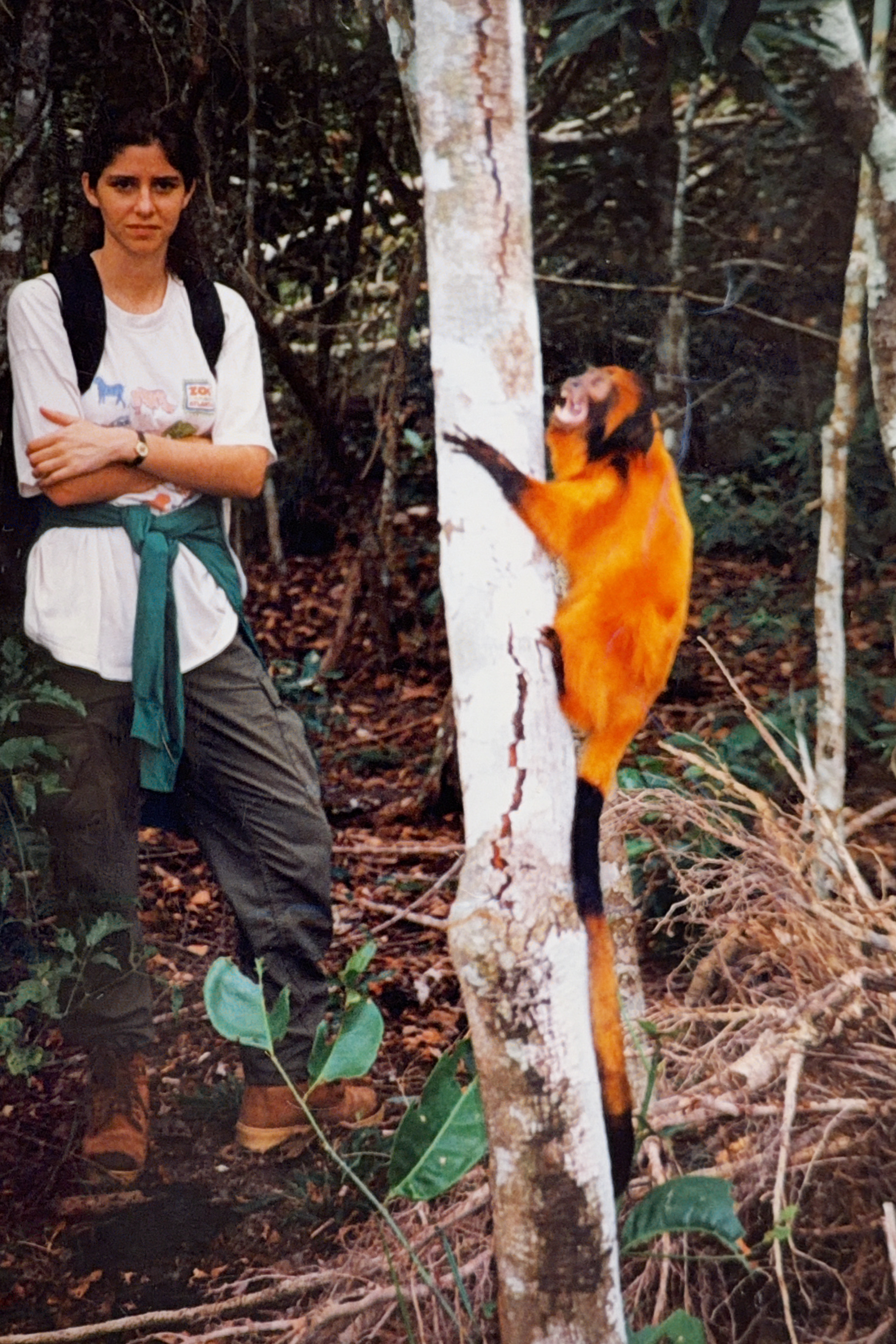
Tara Stoinski, Ph.D.
Ph.D. Psychology 2000
Tara Stoinski is CEO and chief scientific officer of the Dian Fossey Gorilla Fund, an organization dedicated to conserving some of the world's most biodiverse forests and addressing 12 of the 17 United Nations' Sustainable Development Goals. She has studied gorillas for more than three decades and is coauthor of 170+ scientific publications. Her work has been featured in outlets including 60 Minutes, National Geographic, BBC, CNN, and NBC. Committed to training the next generation, Stoinski recently co-led the creation of the Fossey Fund's award-winning Ellen DeGeneres Campus, a state-of-the-art research and educational facility in Rwanda that trains hundreds of early-career African and international scientists each year and serves as a convening center for conservationists worldwide. In addition to her doctorate from Georgia Tech, she holds degrees from Tufts University and the University of Oxford. She is associated faculty at Emory University and holds leadership positions within the conservation and primatology communities.
What does Georgia Tech mean to you?
Georgia Tech has had such an outsized influence on my life. It was the teaching and training ground for my research career, where I learned about scientific inquiry and rigor. Having studied as a biologist but then joined a psychology department, I was given the opportunity to learn from some of the country's leading researchers in the fields of organizational and engineering psychology, cognitive aging, and behavioral analysis. Through my visionary Ph.D. advisor, Terry Maple, I had the opportunity not only to meet industry leaders in the zoo profession but also to work alongside them in helping to ask important questions about the future of zoos and think about how to design better facilities for both animals and people. Maple also nurtured my passion for conservation, something that was not encouraged at the other institutions where I applied for graduate school. His mentorship in both areas laid the groundwork for the position I hold today as well as my almost 15 years as a scientist at Zoo Atlanta. But just as important as the academic and professional opportunities Georgia Tech provided are the personal ones. The fellow students that I met in graduate school remain my dearest friends and most trusted colleagues, people who I have turned to in times of immense joy and incredible sorrow. They have enriched my life as much as, if not more than, the profession that Tech so well prepared me for.