
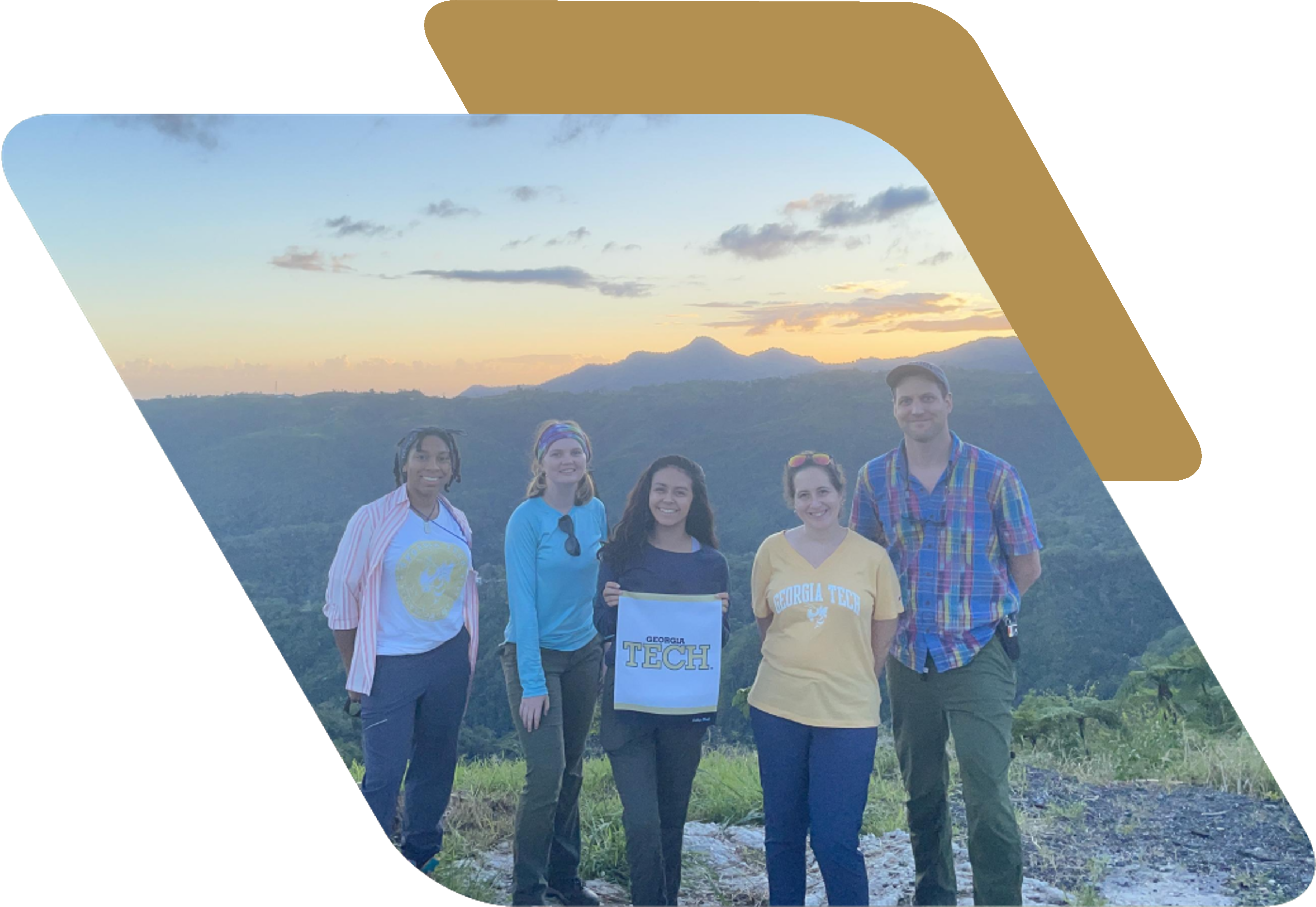
In the School of Earth and Atmospheric Sciences (EAS), students and faculty are motivated to produce breakthrough discoveries through research in Earth, atmospheric, ocean, and planetary sciences as well as interdisciplinary research involving the Earth system and the environment. EAS provides vibrant and inclusive learning experiences and environments that prepare students to become the future leaders of academia, government, and industry. Students at EAS can also expect to effectively engage with the public both locally and globally to apply their scientific knowledge to inform public policy, resource management, and environmental stewardship.
Download this information as a pdf.
Core and Interdisciplinary Graduate Programs
- Earth and Atmospheric Sciences M.S./Ph.D.: This program is designed to train academic researchers in Earth, atmospheric, ocean, and planetary sciences, preparing students compete for top faculty positions and careers in research and industry.
- Atmospheric Science M.S., Professional Track: This program is designed specifically for students who already have a Bachelor's degree and are interested in switching fields to meteorology. A student completing this M.S. degree will have all the course requirements for membership in the American Meteorological Society and for employment by NOAA and the National Weather Service.
- Ocean Sciences and Engineering (OSE) Ph.D.: A partnership between EAS, Civil and Environmental Engineering, and Biological Sciences, OSE educates the next generation of transdisciplinary ocean scientists and engineers to advance research at the frontiers of the physical, biological, chemical, and human dimensions of ocean systems.
- Quantitative Biosciences (QBioS) Ph.D.: QBioS is an interdisciplinary program designed to train and prepare students to identify and solve foundational and applied problems in the biological sciences. Students pursue research across a broad range of research themes spanning molecular and cellular biosciences, ecology and earth systems, and more.
Research Areas
Our graduate programs provide exciting and cutting-edge research opportunities under the mentorship of a uniformly strong, research-active faculty in the areas of:
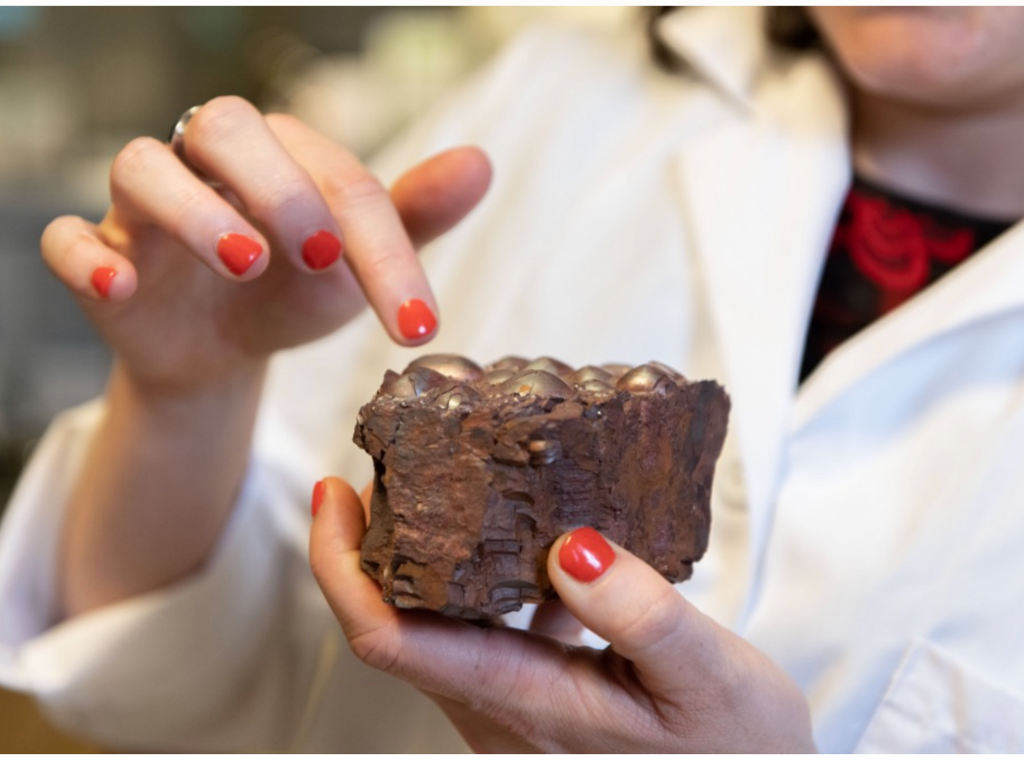
- Atmospheric chemistry, aerosols, and clouds
- Paleoclimate
- Space and planetary science
- Astrobiology
- Biogeochemistry
- Climate, oceanography, and weather
- Solid earth sciences
- Cyrospheric sciences
Funding Information
Ph.D. students obtain stipends either via GRAs, GTAs, or fellowships such as the NSF GRFP, NIH NRSA, and other competitive fellowships. Yearly stipends for Ph.D. students start at $37,500 (plus waiver of tuition) and include health insurance coverage.
Commitment to Community
EAS is committed to fostering an equitable, collegial, and collaborative department, such that the whole is greater than the sum of the parts. We value diversity, learn from each other, and are able to take on larger challenges by combining different areas of expertise. Graduate students in EAS are members of GEAS, the department’s graduate student-run organization, and are encouraged to participate in GEAS activities. It is composed of an elected board as well as academic representatives for each research discipline within the department. The organization’s e-board serves as a liaison between students and faculty, and organizes symposiums as well as social, professional development, and outreach events.
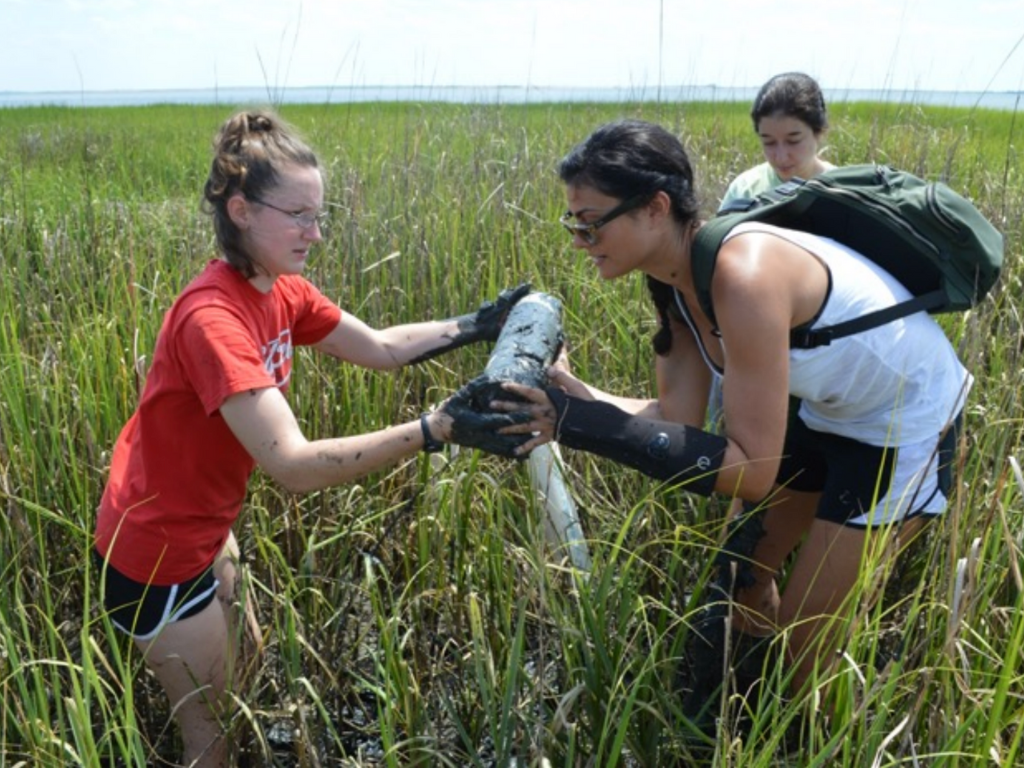 Admissions
The deadline for graduate applications is the first Monday following New Year's Day (January 1). We welcome applicants with backgrounds in natural sciences, mathematics, computer science, and/or engineering. You do not have to have a master's degree to enter our Ph.D. program. As research in EAS covers a wide range of disciplines, it is important that prospective students contact potential advisors to determine if their research interests and backgrounds are aligned well before the application deadline. Georgia Tech and EAS are committed to supporting graduate student diversity on campus. The Graduate Admission Committee will no longer consider GRE scores for admission decisions. After the application deadline, the Graduate Admission Committee will review completed applications. Most decisions are released to applicants by the Graduate Studies Office, typically in mid-February.
More Information
For more information, please see eas.gatech.edu, or submit questions to gradinfo@eas.gatech.edu.