
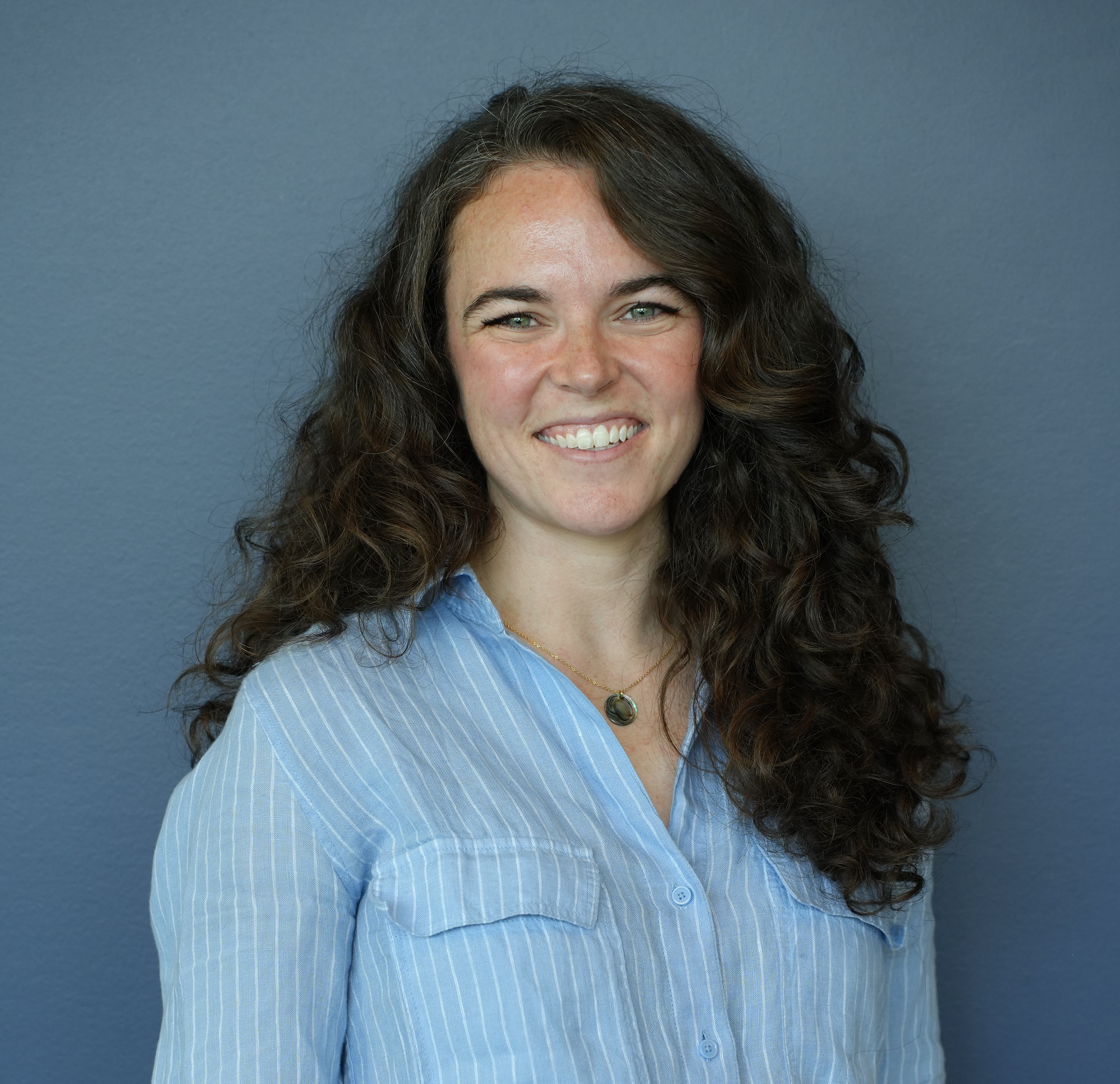
Headshot
The award will support funding aimed at uncovering new insights that could support future coral restoration and disease management efforts.
School of Biological Sciences Assistant Professor Lauren Speare has received a Maximizing Investigators’ Research Award (MIRA) from the National Institute of General Medical Sciences (NIGMS), part of the National Institutes of Health (NIH). According to the MIRA website, the awards provide investigators with long-term, flexible funding to pursue ambitious research programs and explore promising new directions as discoveries emerge.
Speare plans to use the funding to build on her lab’s previous finding that naturally occurring predatory bacteria can reduce disease severity in threatened staghorn corals by defending them against harmful bacteria. Her new research will move beyond direct predator-prey interactions to better understand how bacterial predators influence the broader microbial communities living on corals.
“We know bacterial predators can alter disease outcomes in corals,” explains Speare. “What we don’t yet comprehend is what predation actually does to a complex microbiome inside a living animal. Does a predator simply remove particular bacteria, or can those interactions ripple through the entire microbiome and ultimately affect the host?”
Understanding those changes could reveal why some corals are better able to resist disease and recover from environmental stress than others.
Next Steps
Speare and researchers from the Speare Marine Microbial Ecology Lab will investigate microbial predation outside the laboratory in a whole-community context.
“Most of what we know about microbial interactions comes from studying one or two populations in a test tube,” says Speare. “But microbes can behave very differently in a living host. We want to understand those interactions where they are actually happening.”
Her research will use staghorn corals as a model for observing these interactions over time. Because corals are made up of colonies of genetically identical animal polyps, scientists can repeatedly sample the same colony and track how its microbial communities change. This approach offers a unique window into how microbiomes evolve within an animal host, something that is much more difficult to study in many other animals used in research
"One of the really powerful things about corals as a model is that we can repeatedly observe what is happening within the same host," says Speare. "Instead of taking a single snapshot of a microbiome, we can follow how interactions unfold through time and explore how those changes ultimately affect the animal."
Speare hopes the research will uncover how bacteria interact within coral microbiomes and whether those interactions can help corals stay healthy and resist disease.
“It’s unusual to have a model system where fundamental questions about microbial ecology can have such immediate relevance to conservation,” says Speare. “If we learn something that can improve coral health or restoration efforts, we can communicate those findings directly to the practitioners who are actively working to restore these populations.”
Seed Grant Support
Speare credits two prior grants for providing preliminary data for the MIRA award. A NOAA Ruth D. Gates Coral Restoration Innovation Grant helped her develop disease models and investigate the potential health applications of predatory bacteria in corals. A Georgia Tech Sustainability Next Seed Grant filled a critical knowledge gap in the research by testing how these bacterial predators interact with healthy corals.
“Before we could ask what microbial predation does within a complex microbiome, we needed to establish that these predators could persist within corals without negatively affecting the host,” says Speare. “That work gave us the foundation to start asking much bigger ecological questions.”
The Sustainability Next Seed Grant, administered by the Brook Byers Institute for Sustainable Systems, also supported workshops and collaboration-building efforts that strengthened partnerships with the University of Miami’s Lirman Lab and Rescue a Reef which provide corals and expertise for ongoing restoration-focused research.
Looking Ahead
“The flexibility that comes with this funding is incredibly exciting,” says Speare. “We have five years to follow the biology wherever it leads us. If we discover an unexpected interaction or mechanism, we have the freedom to pursue it rather than being constrained by a single predefined project. That gives us the opportunity to build a much broader understanding of how microbial predation influences coral health.”
Support Acknowledgement
Research reported in this publication was supported by the National Institute of General Medical Sciences of the National Institutes of Health under Award Number 1R35GM165598.