
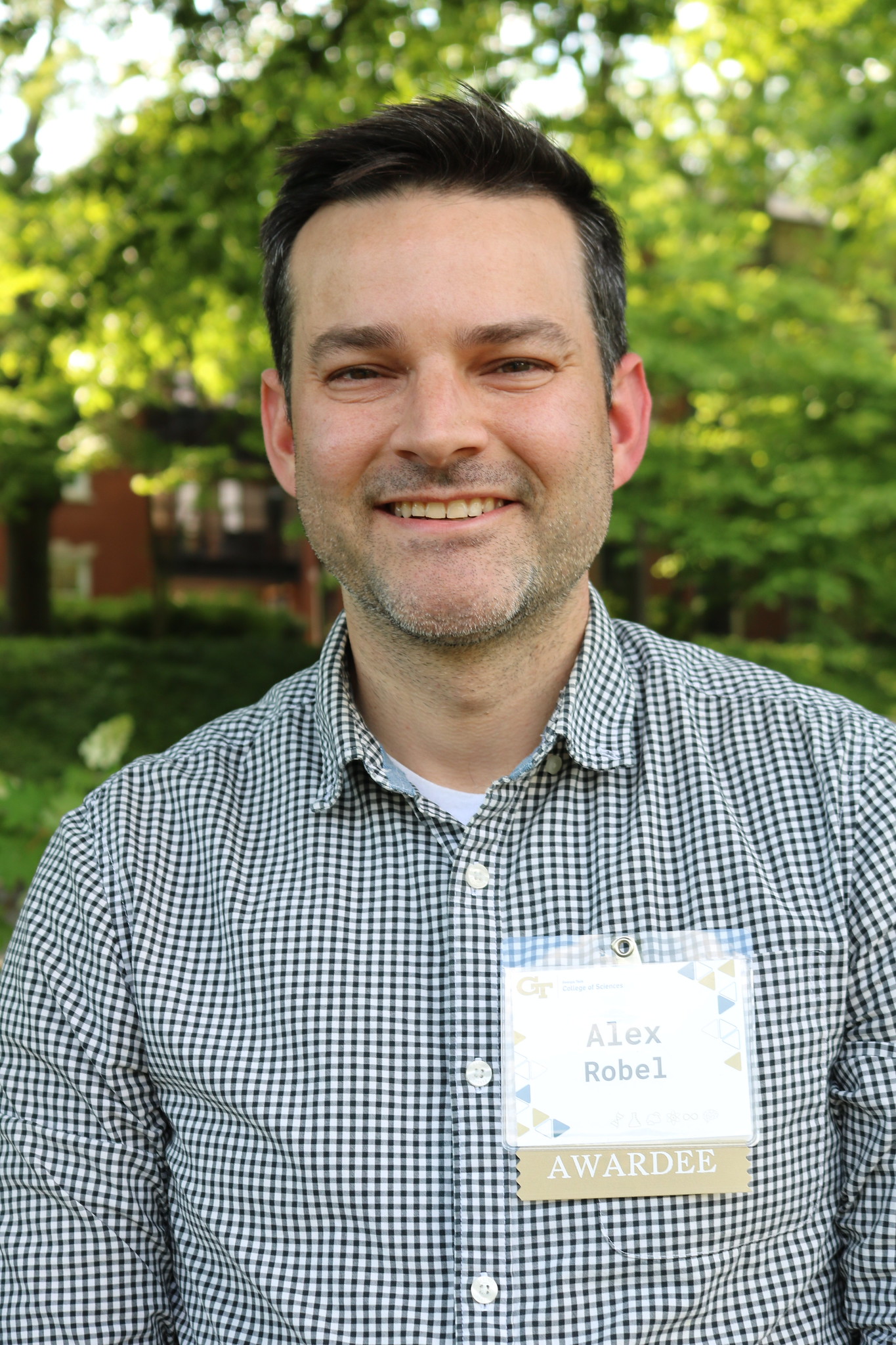
Alex Robel
The CHORUS research project will combine advanced flood modeling, artificial intelligence, and community partnerships to help coastal residents in Georgia and New York evaluate flooding solutions and shape resilience planning.
A new research project aims to empower coastal communities. Using advanced AI-based flood modeling, residents will be able to compare flood mitigation strategies and identify the potential solutions that best meet their needs.
The CHORUS (Community Hubs for Optimizing Resilience) project will collaborate with coastal communities in Georgia and New York and will be split into two pieces: technology development and community engagement.
“We’re not just building a simulator and hoping it fits the needs of coastal residents,” explains Alex Robel, project leader and Jean “Chris” Purvis Associate Professor in the School of Earth and Atmospheric Sciences. "By collaborating with community partners from the very beginning, we can ensure that what we ultimately develop will be effective because the people who will be using it are helping design it.”
Putting Flood Modeling in Residents' Hands
The technology development component will include faculty from the College of Sciences and the College of Computing. The College of Sciences team will develop an AI-based flood simulator and the College of Computing team led by Josiah Hester, associate professor and Catherine M. and James E. Allchin Early Career Professor, will create a web platform that allows users to visualize potential flood impacts.
Traditional flood models can take hours or days to generate results and often require specialized expertise and expensive computing resources. The CHORUS platform will be designed to provide easy-to-understand results in seconds, producing building-scale flood maps that show how water moves through streets, yards, and structures during a range of flooding scenarios. Researchers will use the model to test how specific interventions, such as seawalls, restored marshes, or improved stormwater infrastructure, could affect flooding.
Eventually, users will be able to test their own scenarios through the browser-based tool, enabling them to explore how different decisions could change flood impacts in their communities:
“Users will be able to go into a web browser and indicate where a sea wall could go or change a parking lot into a porous vegetated landscape, then click simulate. Within a few seconds, they’ll have a new flood map showing the impacts of these interventions,” says Robel.
A Community-Driven Approach
A collaborative effort with the New York Climate Exchange, the project will be funded by Georgia Sea Grant and IBM, with support from Georgia Tech for Georgia’s Tomorrow (GT2), Georgia Tech’s Coastal Equity and Resilience (CEAR) Hub, and the National Sea Grant College Program. The CHORUS project is an initiative of the New York Climate Exchange, where Georgia Tech is a core partner institution.
Community engagement in Georgia is being led by CEAR and the Pin Point Betterment Association, which represents descendants of the historic Gullah Geechee community near Savannah. In New York, the project team is partnering with the New York Climate Exchange and the Waterfront Alliance to work with communities surrounding Jamaica Bay.
“What makes this partnership meaningful is that it puts community voices at the center,” says Jasmine Smith, president of the Pin Point Betterment Association. “Too often, decisions are made to ‘better’ communities without actually involving the people who live there. We hope this partnership can serve as a blueprint for how communities are included in future sustainability projects from the very beginning.”
The project includes community advisory boards and technical advisory boards in both locations. Community members will help identify priority assets, select flood scenarios for analysis, and shape the design of the web-based tool. They’ll also test and offer feedback. Technical advisory boards made up of local officials, planners, and other experts will help evaluate the feasibility of proposed solutions.
“The aim is to blend information from both groups without allowing the technical perspective to override community priorities,” says Robel.
According to Robel, giving communities direct access to flood modeling tools can help close the gap between public input and infrastructure planning.
“We are putting decision making in the hands of the community. With a tool like this, the community can say: ‘We want to prevent flooding at this community center, this school, or this road,’” says Robel. “They can run the model, produce data, and present it to local governments or the Army Corps of Engineers — advocating for potential solutions themselves rather than relying on outside experts.”
Robel sees this project as just the beginning:
“Funded by two-year grants, CHORUS is meant to be a pilot for how this kind of community-centered project can be done. Once we understand some of the challenges and opportunities involved, it will hopefully make it easier for us to scale this work to additional community partners.”
About Community-Engaged Research at Georgia Tech
Georgia Tech is actively working to foster more projects that foster community engagement. Collaborative groups at Georgia Tech involved in the CHORUS project include:
- The CEAR Hub, part of the Institute for People and Technology (IPaT), and housed at the Georgia Tech Savannah campus, advances community-engaged research and planning throughout coastal Georgia, helping communities build resilience to environmental and climate challenges.
- The Center for Sustainable Communities Research and Education (SCoRE) trains faculty, students, and staff in best practices for conducting community-engaged research as well as facilitating connections directly with communities.
- The Brook Byers Institute for Sustainable Systems (BBISS) houses SCoRE and is Georgia Tech’s point of contact to the New York Climate Exchange. BBISS forms partnerships like these to fulfill its mission to expand the reach and impact of Georgia Tech’s sustainability research.
Additional Images
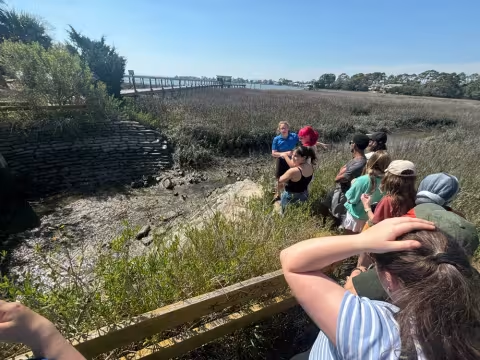
<p>Jill Gambill, executive director and senior research associate of the CEAR Hub, demonstrates a tide gate engineered to maintain storm sewer outflow capacity amidst rising sea levels to Georgia Tech students.</p>