
 Georgia Tech's B.S. in Environmental Science (ENVS) degree builds the student’s expertise to tackle environmental challenges at a global scale. Our core curriculum includes Earth sciences, biology, chemistry, physics, mathematics, and policy. Students explore the structure, policy, and future of environmental systems and the complex ways in which humans interact with them.
Through the ENVS degree, students will:
- Develop a deep understanding of interdisciplinary approaches to solving environmental challenges in ecology, climate science, and environmental geochemistry. Students select from a wide range of electives across Earth and biological systems.
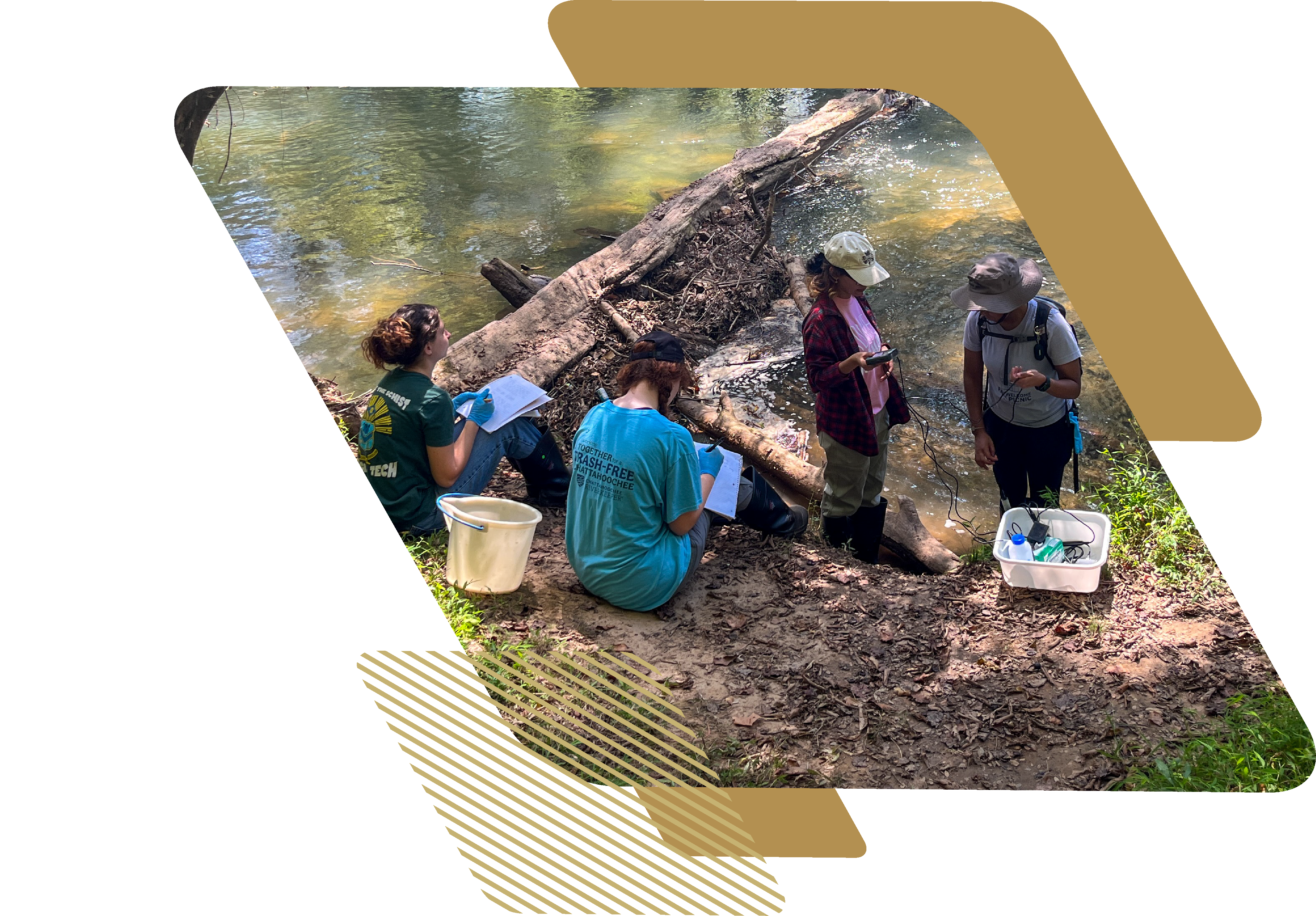
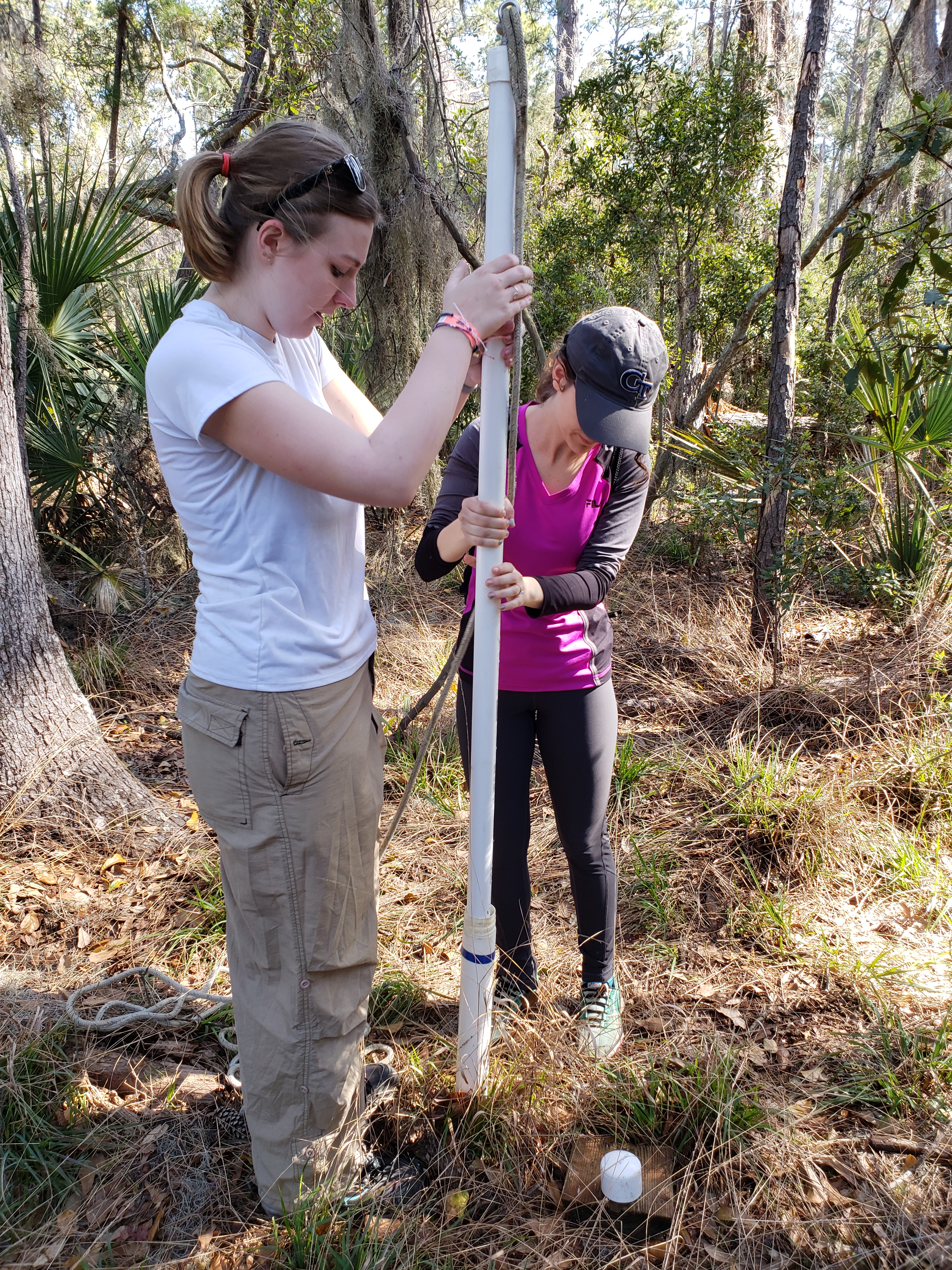
- Become adept at utilizing computational, laboratory, and field methods, applying these tools in coursework tailored to your specific career interests.
- Advance communication and teamwork in a vibrant community that prepares students to launch impactful careers in environmental conservation, consulting, education, and sustainability.
Download this information as a pdf.
Opportunities
The ENVS degree is a joint program by the School of Earth and Atmospheric Sciences and the School of Biological Sciences. Together, they offer research opportunities in a wide range of subdisciplines. All of our ENVS students conduct research in a faculty member's laboratory or during a capstone research course. Our faculty are at the forefront of their fields, working on everything from climate science to organismal biology. They are dedicated to mentoring students and fostering a wealth of perspectives to enrich the student learning experience.
Our graduates gain the skills and experience necessary to be successful in graduate programs and industries around the world. From internships to job placement, we're here to support our students’ professional development every step of the way. The ENVS degree will prepare students for careers in environmental consulting, conservation, sustainability, environmental law, and the pursuit of graduate or professional degrees in environmentally related disciplines.
Undergraduate research
Undergraduate students working in world renowned research groups in the school have contributed to research that has been presented at national and international conferences and published in leading scholarly journals. For example:
- Claire Riggs spent this past summer in the boreal peatlands of Alaska with Dr. Jennifer Bowen’s Aquatic Biogeochemistry research team. They monitor peatland sites for carbon flux and the impact of microbes and climate.
- Based on their research, Logan Mann was the first author on the paper “Synchronization of Heinrich and Dansgaard-Oeschger Events Through Ice-Ocean Interactions,” published in Paleoceanography and Paleoclimatology.
- Evolution in urban populations is the focus in Dr. James Stroud’s lab, where Elle Garman, Ashlyn Willis, and Camdyn Gates conduct field and laboratory research on Anolis lizards in Miami, FL. The lab studies natural behaviors and skeletal changes to toe length in urban populations.
- Trisha Tambe investigated the production rate of sulfate aerosols at the National Center for Atmospheric Research (NCAR) in Boulder, CO. She is part of the SOARS program in NCAR’s Atmospheric Chemistry Observations and Modeling Laboratory.
 Undergraduate internships
Undergraduate EAS students have participated in a variety of paid and for-credit internships, expanding their repertoire of knowledge. For example: NASA ⋅ Smithsonian Institution ⋅ Fulton County Public Works ⋅ FOX Environmental ⋅ NCAR ⋅ Clean Cities Georgia.
Careers
ENVS graduates take positions in all types of employment sectors, such as: City Planning ⋅ Climatology ⋅ Environmental Monitoring ⋅ Geochemistry ⋅ Oceanography ⋅ State and Federal Agencies.
The B.S. in Environmental Science program also provides exceptional levels of preparation for admission to graduate study and professional graduate programs. Students are prepared to engage in careers related to conservation, atmospheric sciences, geology, urban ecology, sustainability, environmental policy and law, and medicine.
The U.S. Department of Labor reports an average range of salaries for Earth and Atmospheric Scientists (geoscientist, atmospheric and space scientists, and hydrologists) of $103,000 – $116,000.
For more information
For more information, please see eas.gatech.edu/envs or contact the School of Earth and Atmospheric Sciences’ Undergraduate Advisor Samantha Wilson or ENVS Director Linda Green.