
Neuroscience is vital to everything we do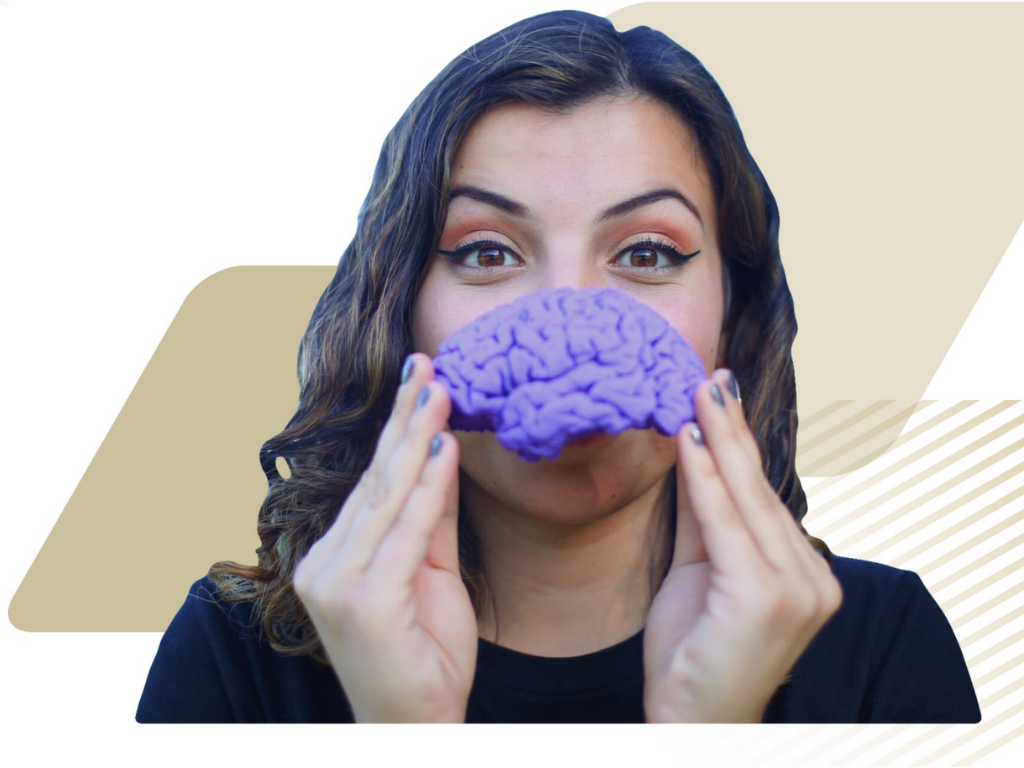
Every aspect of the human experience — our intellectual and emotional lives, perceptions, sense of wellbeing, and volitional activities — all rely on brain and nervous system function. Neuroscience is the field that attempts to explain and predict the what, the why, and the how of the human experience — as well as our understanding of animals’ experiences.
Download major information as a pdf.
Interdisciplinary and flexible with pre-health, business, and research options
The B.S. in Neuroscience degree at Georgia Tech is an interdisciplinary degree that provides training in behavioral and cognitive, molecular, cellular, and systems neuroscience. Students have a lot of flexibility in the design of their four-year program of study. In addition to a set of courses that make up the neuroscience core, students select from a list of neuroscience electives. Students complete a 15 credit-hour set of breadth electives chosen from such areas as biology, chemistry, computing, engineering, mathematics, physics, physiology, and psychology, as well as specialties like music technology and philosophy. The curriculum offers a pre-health option for students who are interested in careers in medicine (e.g., pre-medical, pre-pharmacy, pre-dental, pre-physical therapy, etc.), along with a research option.
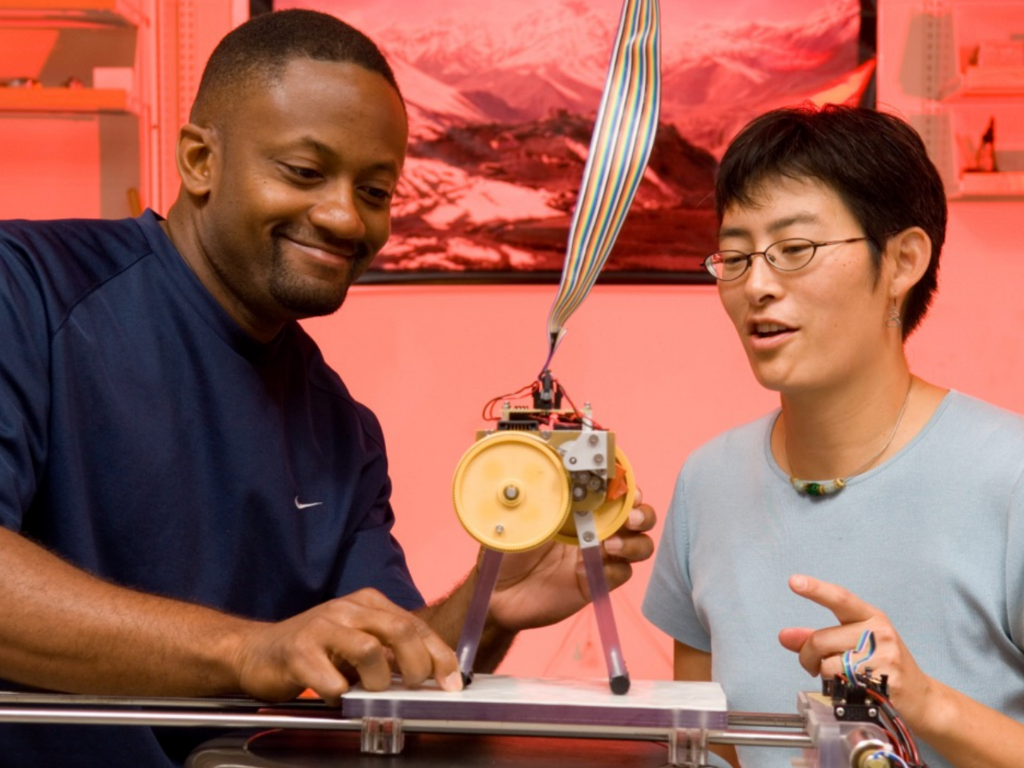 Learn neuroscience from cells to behavior
Georgia Tech Neuroscience graduates will possess a multiscale understanding of the structure and function of the brain and nervous system, from molecules through cells and networks, to systems and behavior. Each graduate will have knowledge of methods, applied solutions, and technologies that enable new discoveries and support their translation into diagnoses and treatments of brain disorders through academic, government, and industrial partnerships.
Undergraduate research
Undergraduate students working in world-renowned research groups in the College of Sciences have contributed to research that has been presented at national and international conferences and published in leading scholarly journals. Research in neuroscience explores:
Research in Neuroscience explores:
- Behavior and Cognition: brain imaging, neuroplasticity, cognitive motor control, motor physiology, clinical neurophysiology, neural mechanisms for vision, attention, memory, learning.
- Molecular and Cellular Science: cell signaling, cancer biology, receptor trafficking, cell differentiation, molecular physiology, molecular biophysics, structural biology, genetics, cellular synapses.
- Systems: artificial intelligence, electrophysiology, biomechanics and neural control of movement, neural coding, neural prosthetics, rehabilitation, human-computer interactions.
International opportunities
Neuroscience majors have a wide range of opportunities for undergraduate study at institutions throughout the world. Further information can be obtained from the Office of International Education. Each year, many College of Sciences students participate in Georgia Tech-led programs in France, Italy, Scotland, Spain, and Australia/Fiji/New Zealand.
Careers
The B.S. program in Neuroscience provides exceptional levels of preparation for admission to graduate study, medical school, and other professional graduate programs (e.g., veterinary science, pharmacy, law, etc.), as well as careers in industry. Neuroscience graduates take positions in all types of employment sectors, such as:
- Research & Development • Healthcare (Medicine, Pharmaceuticals, Rehabilitation) • Forensics • Sales and Marketing • Engineering/Industrial Design • Law/Public Policy • Counseling/Psychiatry/Psychology • Clinical Laboratories • Aesthetics (Music, Art) • Teaching • State/Federal Agencies (NIH, CDC, DoD) • Artificial Intelligence • Human-Computer interaction
Georgia Tech has the largest voluntary co-op education program in the nation. Participation in co-op or internship programs provides financial support for your studies and invaluable experiences.
Georgia Tech Georgia Tech is nationally recognized as a top-value college due to its academics, affordability, and career outcomes.
More information
Visit neuroscience.cos.gatech.edu or contact Mathew Nusnbaum, the associate director of the Neuroscience Undergraduate Program, at mnusnbaum3@gatech.edu.