
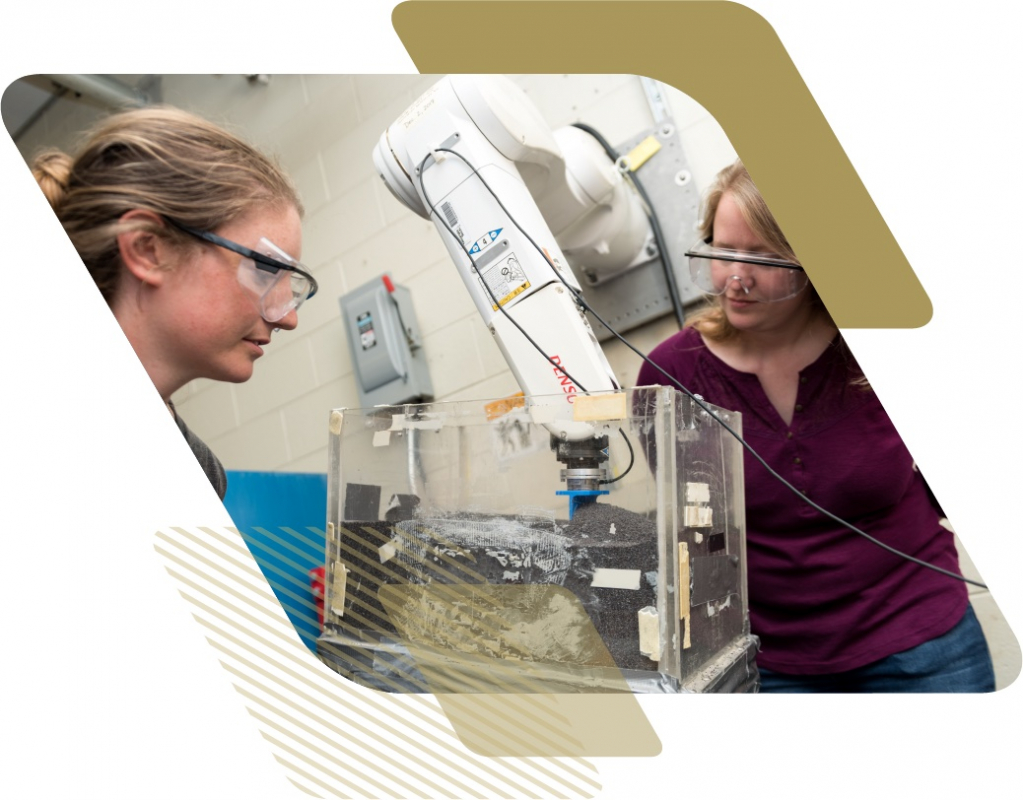
 The School of Physics offers Bachelor of Science degrees in physics and applied physics.
The undergraduate physics degree is broad based with an initial emphasis on core topics such as classical and quantum mechanics, thermal physics, and electromagnetism. This is followed by a range of more specialized courses including atomic, solid state, optical, nuclear, and particle physics; biophysics, astrophysics, computational physics, and relativity.
In addition to the core physics training, applied physics students get hands on laboratory experience in Electronics and Modern Optics and can pursue optional tracks in
- Nuclear and Radiological Engineering or
- Electrical Engineering
Each track includes four in depth courses from Georgia Tech’s world renowned engineering programs, giving students a direct gateway into high demand, high impact fields.
Both majors allow for an optional concentration in the physics of living systems. Students are able to develop their own programs of study with the aid of faculty advisement.
Download this information as a pdf.
Building the foundation for academic and industry careers
Approximately half of all physics and applied physics majors progress to doctoral study at either Georgia Tech or at other prestigious universities. Students may also go to graduate school in other disciplines such as electrical engineering and materials science, where a bachelor’s degree in physics or applied physics is recognized as effective preparation. Other students choose to go into education, business, and industry. Banking (economic forecasting) and oil exploration are among the many areas that seek physics and applied physics majors.
Creating community
The Society of Physics Students and the Society of Women in Physics at Georgia Tech provide a vibrant scholarly and social environment in the School, as well as an introduction to the community of physicists. Activities such as general interest lectures, outreach, field trips, and social functions allow students to interact with their peers and faculty members.
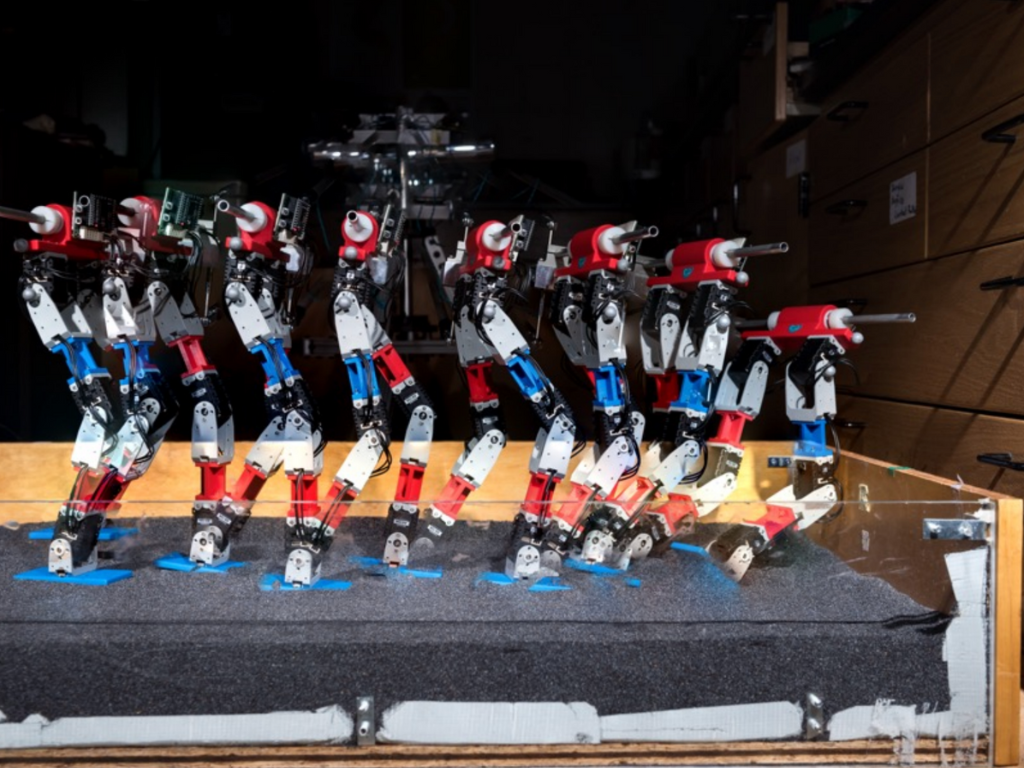 Undergraduate research
Undergraduate students working in world renowned research groups in the school have the opportunity to contribute to research published in leading scholarly journals and to attend premier conferences in their fields. For example:
- Lila Nassar investigated the biophysics of cell cultures using a variety of microscopies in the laboratory of Professor Jennifer Curtis and has also conducted research in quantum magnetism under the direction of Professor Martin Mourigal.
- Vishal Sudahkar, working with Professor Zeb Rocklin and his collaborators, conducted a theoretical study on the rigidity of tensegrities, objects with both rigid and flexible elements common in biology and engineering.
- As Letson Scholars, Sam Quinn conducted theoretical studies of turbulence in the group of Professor Roman Grigoriev, while Yiting Pei attempted to optimize the spectroscopy of thullium atoms embedded in a noble gas matrix in the laboratory of Professor Colin Parker.
- As a Petit Scholar, Julianne Tijani studied the entropy production of antibiotic resistant bacteria in Professor Peter Yunker’s laboratory.
International opportunities
Students in the School of Physics have a wide range of opportunities for undergraduate study at institutions throughout the world. Further information can be obtained from the Office of International Education.
Careers
The B.S. programs in physics and applied physics provide exceptional levels of preparation for graduate study and professional graduate programs (e.g., medicine, veterinary science, pharmacy, law, etc.) Graduates take positions in all types of employment sectors, such as:
Consulting • Nuclear Physics • Nonlinear Physics • Acoustics • Health Physics • Communications • Aerodynamics • State and Federal Agencies (e.g., NIST, NASA) • Condensed Matter Physics • Research and Development • Medical Instrumentation • Astrophysics and Astronomy • Optics • Particle and Atomic Physics • Sales and Marketing • High School and College Teaching
Georgia Tech has the largest voluntary co‐op education program in the nation. Participation in co‐op or internship programs provides financial support for your studies and invaluable experiences.
Georgia Tech is nationally recognized as a top value college due to its academics, affordability, and career outcomes.
More Information
For more information, please see physics.gatech.edu.