
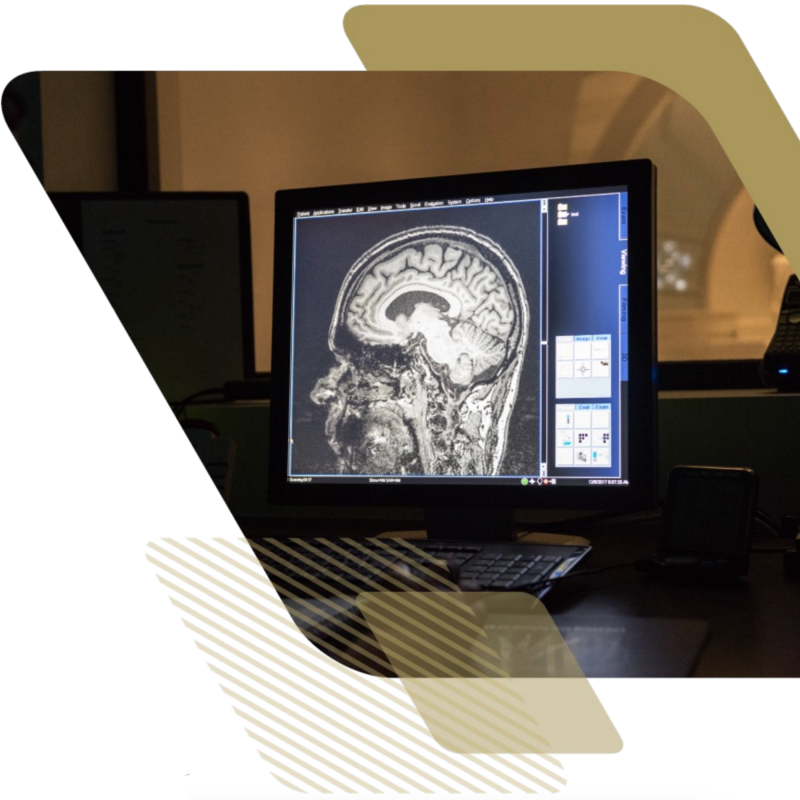
 Psychology is the study of mental processes and the relationship between these processes and behavior. The undergraduate program provides a broad‐based natural and social science approach to the science of psychology. The curriculum stresses methodological skills so that students learn the fundamentals of how to ask and answer questions about the mind, neurology, and behavior; these skills are also applicable to many non‐psychology careers.
Download this information as a pdf.
Prioritizing student-faculty interaction
The student‐to‐faculty ratio in the school fosters close interaction between faculty and students and provides a personal and friendly learning environment. Undergraduates are encouraged to participate in faculty‐directed research. The student-led Psychology Association provides an academic and social community that further enhances the environment for undergraduate study.
Theoretical and research training, capstone experience
The curriculum includes general psychology, research methods, statistics, upper-division courses of interest (e.g., cognitive psychology, sensation and perception), lower-division courses of interest (e.g., social psychology, abnormal psychology, developmental psychology), and a capstone experience. Courses in our program are aligned with the school's five research areas (engineering psychology, cognition and brain science, cognitive aging, industrial/organizational psychology, and quantitative psychology) as well as the school's minor programs (science of mental health and wellbeing, computation and cognition, people analytics, and learning science). Psychology majors go on to various positions in industry or continue with graduate study in psychology or a related discipline.
Undergraduate research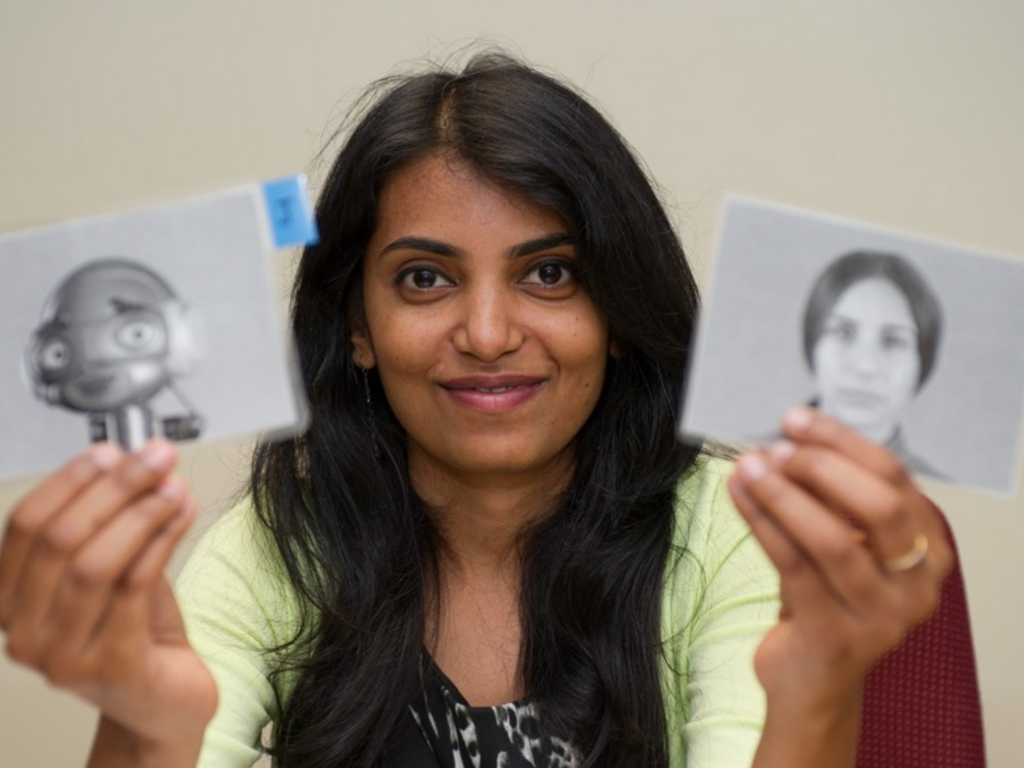
Undergraduate students working in world renowned research groups in the School have contributed to research that has been presented at national and international conferences and published in leading scholarly journals. For example:
- Working under Christopher Wiese, Kinsley Barrett, Matilyn Carlee, Calista Yap, Kingston Barber, and Hailey Demakis contributed to data collection and analysis for an interdisciplinary NSF funded study intended to develop an AI-based consultative partner for mental health workers.
- Undergraduates Jacob Welch and Madison Mathews completed their senior theses in the Problem Solving and Educational Technology (PSET) lab directed by Richard Catrambone. They presented their work at the Georgia Academy of Sciences annual meeting and Georgia Tech Annual Conference of Psychological Research (ACPR), respectively.
- Apurva Pophali completed her senior thesis in Eric Schumacher’s lab, focusing on differential processing of language in bilingual individuals. She presented her work at Georgia Tech’s ACPR and was awarded the prize for most outstanding research presentation.
 International opportunities
Psychology majors have a wide range of opportunities for undergraduate study at institutions throughout the world. Further information can be obtained from the Office of International Education.
Careers
The B.S. program in psychology provides exceptional levels of preparation for admission to graduate study and professional graduate programs (e.g., medicine, veterinary science, pharmacy, law, etc.). Psychology graduates take positions in all types of employment sectors, such as:
Industrial Psychology • Market Research • Forensics • Research and Development • Brain Research • Logistics • Clinical Psychology • Justice • Mental Health Services • Medicine • Human Factors • Human-Computer Interaction • Test Development • High School and College Teaching
Georgia Tech has the largest voluntary co‐op education program in the nation. Participation in co‐op or internship programs provides financial support for your studies and invaluable experiences.
Georgia Tech is nationally recognized as a top-value college due to its academics, affordability, and career outcomes.
More information
For more information, please see psychology.gatech.edu, or contact the School of Psychological and Brain Sciences undergraduate coordinator, William Stern.