

New research shows that an effort to improve wintertime air quality in Fairbanks, Alaska may not be as effective as intended.
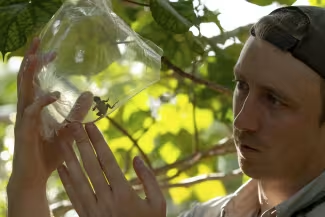
Stroud is being recognized for his groundbreaking research as an integrative evolutionary ecologist.

Executive search firm WittKieffer will host several town halls to gather input from the Georgia Tech community about the EVPR selection process.

Georgia Tech researcher W. Hong Yeo has received a $3 million NSF grant to lead a multidisciplinary team in training graduate students to develop sustainable, biocompatible medical devices that address environmental impacts, aiming to establish best pract

Study abroad students explored the fusion of scientific inquiry and French cuisine through a unique blend of chemistry lectures and hands-on cooking classes.

Mao will use the $450,000 grant to develop new mathematical techniques and models for extracting information hidden in networks.

Georgia Tech’s Distance Math program, which allows eligible high school students to virtually take math courses at Georgia Tech, celebrates its 20th year of serving students.

The Princeton Review and Niche awarded Tech the top spot on their lists of best values for 2025.

Researchers demonstrate music’s impact on learning and memory, with possible therapeutic applications for mental health.

Biology major Anu Iyer wants to make a positive difference in the world; her groundbreaking research detecting Parkinson’s disease demonstrates she’s already well on her way.