

The Ever-Changing Georgia Coast: In Conversation with President Emeritus G. Wayne Clough
On October 23, journey to the Georgia coast with G. Wayne Clough, CE 63, MS CE 65, HON PhD 15, President Emeritus of Georgia Institute of Technology and Secretary Emeritus of the Smithsonian Institution, and author of the new book, The Ever-Changing Georgia Coast: A Natural History of Its Creation, Transformation, and Future.
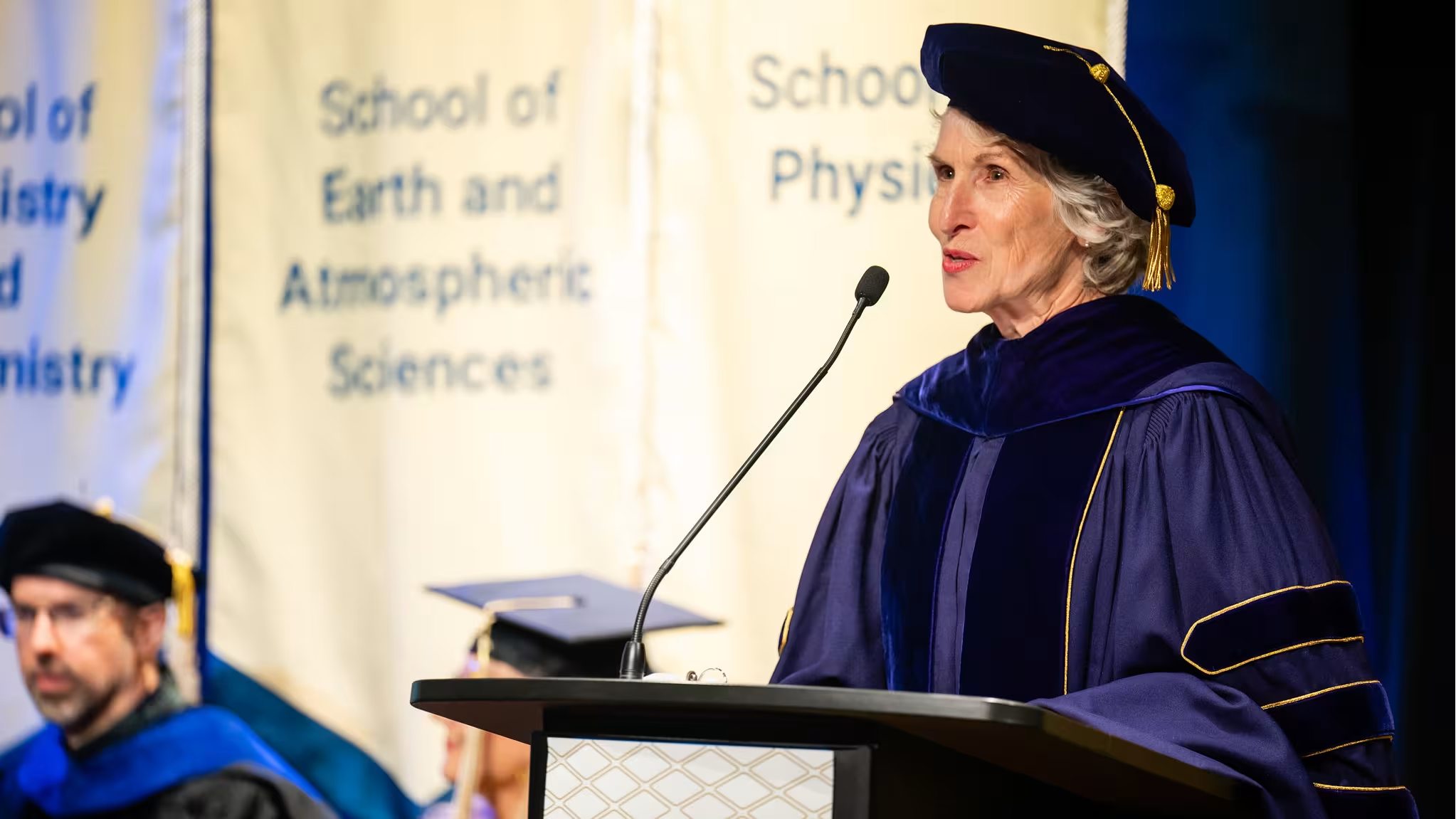
Susan Lozier to Complete Transformative Term as Sciences Dean

Beyond DNA: Large Study Adds Context of Life Circumstances, Environment to Genetic Risks
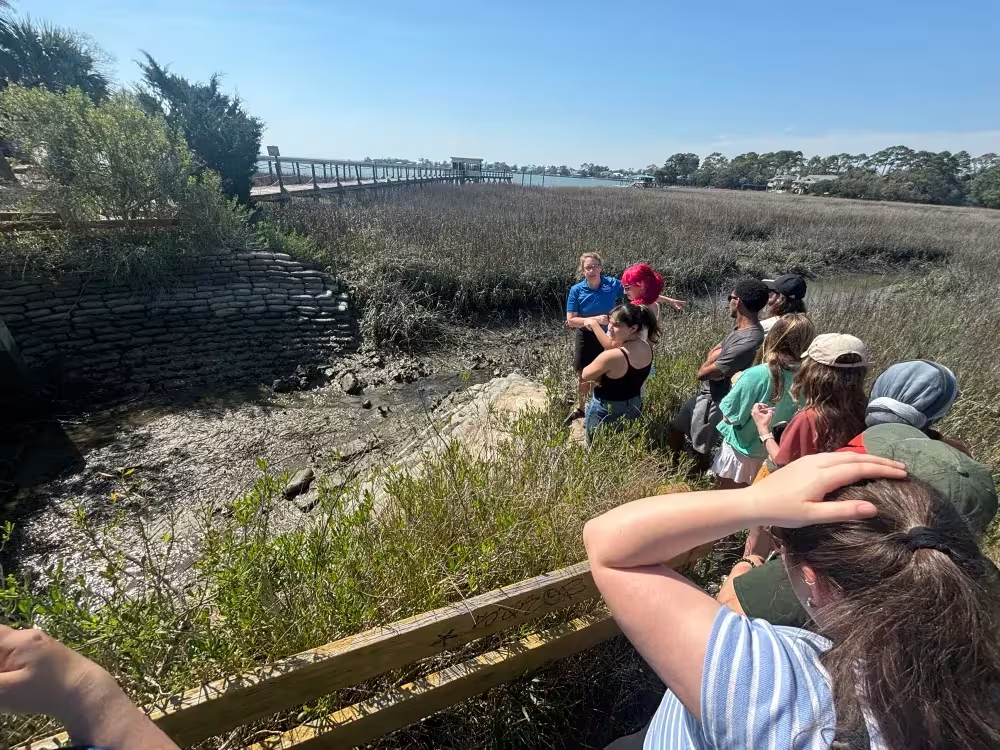
The College of Sciences at Georgia Tech cultivates curiosity, encourages exploration, and fosters innovation to develop leaders and scientific solutions for a better world. Discover more.
Explore the College

Undergraduate Degrees
Learn about applying to the College, scheduling a visit, and majoring in one of our degree programs.
Learn more about Undergraduate Degree Programs in the Sciences
Graduate Degrees
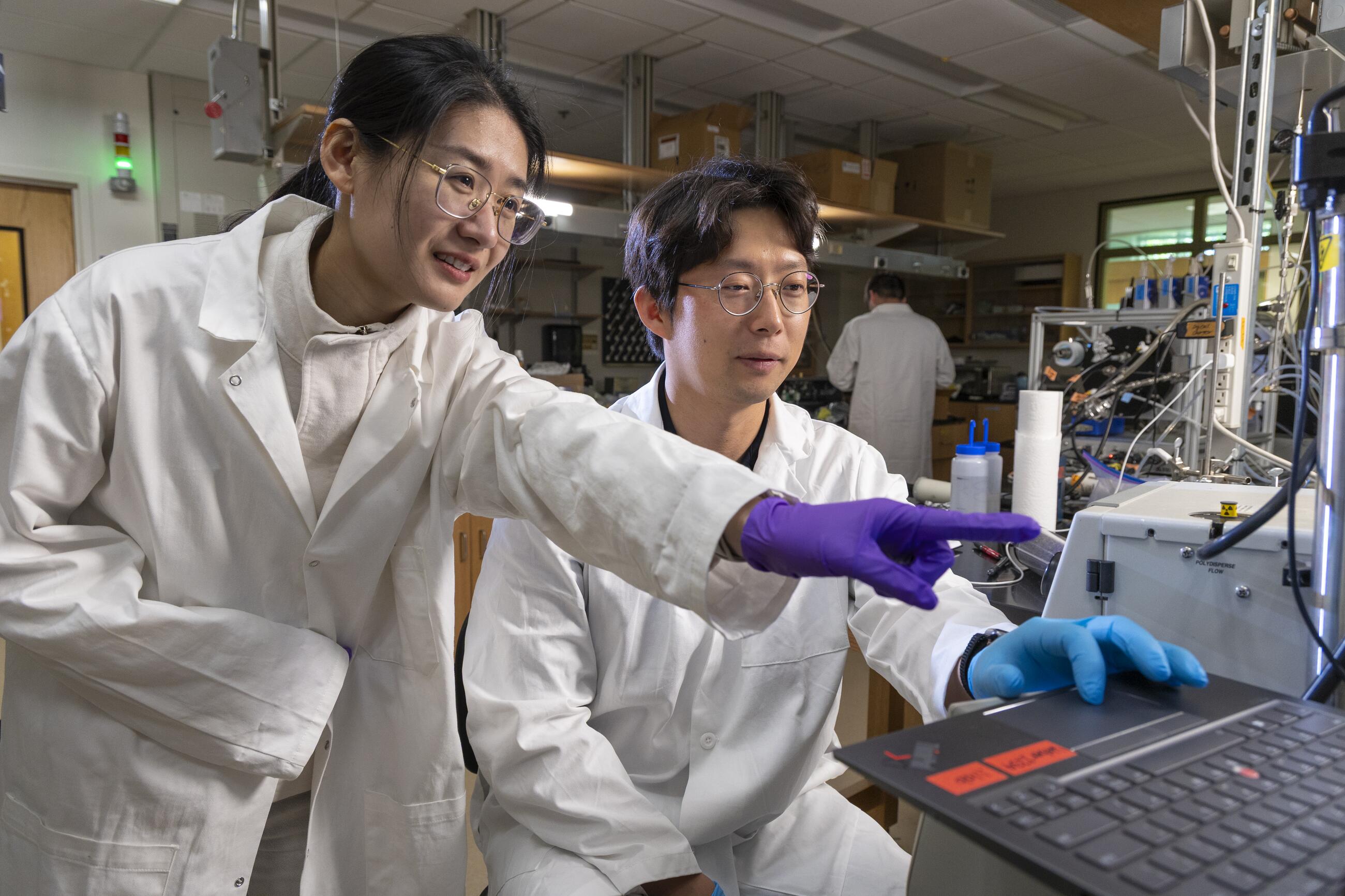
The College of Sciences is home to five Masters programs and seven doctoral programs, in addition to numerous interdisciplinary programs.
Connect with the College
Our alumni are part of the special community linked by traditions and experiences unique to Georgia Tech
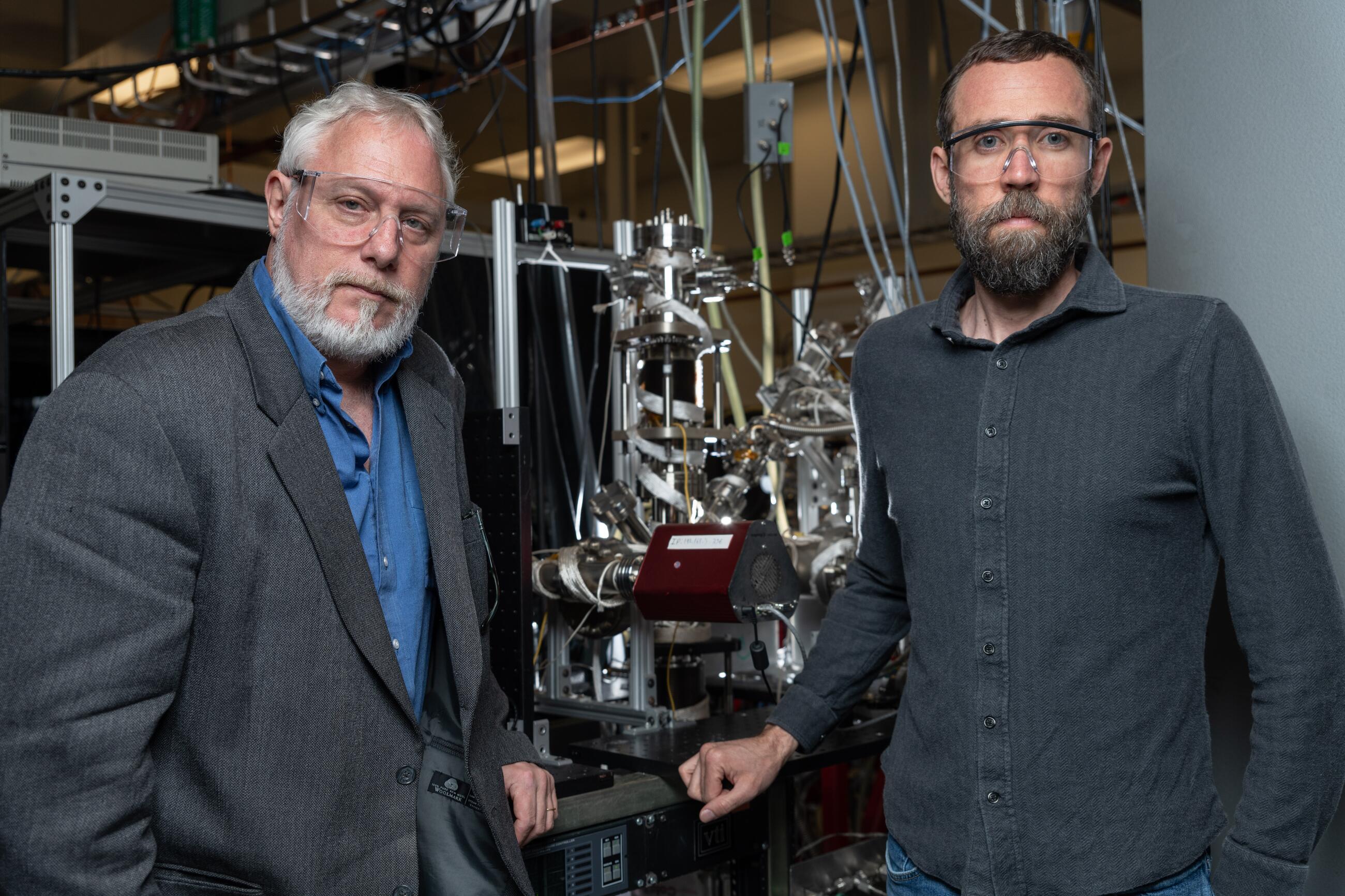
Research
Our faculty and student researchers undertake groundbreaking studies in many fields of scienctific inquiry.
Latest News
Experts in the News
The SBND collaboration releases first neutrino results
Neutrinos are among the most elusive particles in the universe and understanding them may be the key to solving some of the biggest cosmic mysteries. For decades, scientists have been building massive detectors and using intense neutrino sources to capture these ghostly particles.
The Short-Baseline Near Detector is the newest liquid-argon neutrino detector at the U.S. Department of Energy’s Fermi National Accelerator Laboratory. The SBND collaboration published their first results on Oct. 30 in arXiv and submitted to Physical Review Letters for review and publication, marking a critical demonstration of the powerful tool scientists now have at their disposal.
This result focuses on understanding how neutrinos interact with argon atoms and lays critical groundwork needed to prepare for the Fermilab-hosted Deep Underground Neutrino Experiment at the Long-Baseline Neutrino Facility.
“This is a huge milestone for the collaboration,” said Afroditi Papadopoulou, a physicist at Georgia Institute of Technology and member of the SBND collaboration. “This result is going to be a stepping stone for all the analyses that will follow from this point on.”
Fermilab Newsroom
A new pesticide does not kill bumblebees right away, but it does inflict internal damage that turns out to be much worse than immediate death
When scientists exposed bumblebees to a modern insecticide designed to kill crop pests, the bees did not die any faster than unexposed bees. On the face of it, this seems like the best possible outcome.
However, just because a pesticide does not kill a bee right away does not mean the insect is unharmed. A new study from the Georgia Institute of Technology looked at common eastern bumblebees exposed to sulfoxaflor.
While the bees survived, their ovaries shrank and their gene activity drastically changed. Soon, they almost completely stopped laying eggs. Experts say this proves that just counting dead bees misses the massive, silent damage that chemicals leave behind.
Earth.com
Upcoming Events
Wed Nov 11
Machine Learning Seminar Series Fall 2026 | Measuring Cultural Variation: from Twitter to LLMs
Featuring | Lyle Ungar - Professor of Computer and Information Science at the University of Pennsylvania
Fri Nov 13
Fossil Friday
Join the Spatial Ecology and Paleontology Lab for Fossil Fridays. Become a fossil hunter and help discover how ecosystems have changed over time.
Fri Nov 13
Plant Library
Join us every Friday that classes are in session for the Plant Library. We open 3:30 - 4:30 pm to plant seeds, take cuttings, nurture plants, and distribute plants that are ready to take home.
Wed Nov 18
IRIM Fall 2026 Seminar | Restoring Dexterity in Telerobotics: An Engineer’s Journey Into Neuroscience
Featuring | Jeremy D. Brown - John C. Malone Associate Professor, Department of Mechanical Engineering, Johns Hopkins University
Wed Nov 18
ATL CleanTech Connect - Q42026
Join us for the Q4 edition of ATL Cleantech Connect, focused on Emerging Battery Storage Breakthroughs and the innovations shaping the future of energy storage.
Thu Nov 19
Observatory Public Night
On select Thursday evenings during the academic year, the Georgia Tech School of Physics invites you to observe various bright celestial objects through telescopes.